Gates of Old Lahore - A Journey Through the Historic Walled City
Lahore has earned itself recognition as the cultural capital of Pakistan and one of South Asia's oldest cities. Some of the fascinating historical relics of Lahore include Androon Lahore, which is also the popular name for the old walled city of Lahore. This area of Lahore represents Mughal, Sikh and British history through its alleys, mosques, colorful markets, havelis and impressive gates.
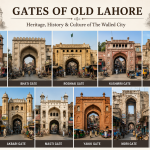
Gates of Old Lahore represent some of the fascinating historic landmarks of the city. In the past, there were fourteen gates leading to and from the walled city of Lahore. Initially, the gates had served a number of purposes including defense, business and transportation. However now a days they serve primarily as tourist attractions and historical landmarks of Lahore city.
There are several gates that are still standing intact in Lahore which attract visitors from all over the world. The gates in Lahore not only represent a beautiful form of architecture but also provide an insight into the cultural heritage and food culture of the city.
Historical Background of the Walled City
The Walled City of Lahore is an ancient monument, but it gained much prominence when it was part of the Mughal Empire. The kings of the Mughal Empire made Lahore a prestigious city and also fortified it with strong walls as a means of protecting the city from enemy attacks.
There were thirteen such gates which facilitated entry into the city from a specific direction or a road leading to the city or from another settlement. It would always be linked with some local community or market.
The gates also served a significant role from the military point of view since all traders, travelers and royal armies entered the city through these gates. Though some gates have been demolished at different times in history, many are still intact and signify Lahore’s rich historical heritage.
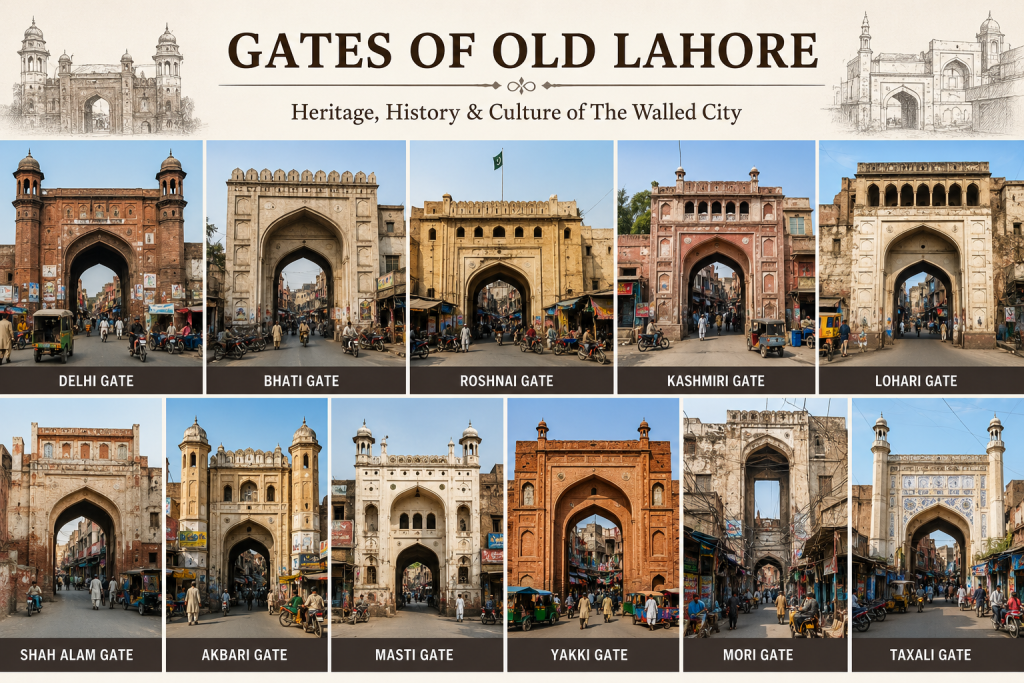
Delhi Gate
One of the most historic gates in Lahore is the Delhi Gate, which has historical significance and was named after that reason. It was named as such because the road passing through the gate led towards Delhi during the time of the Mughals.
The Delhi Gate became one of the main gates in terms of business and administrative purposes within the city. Mughal emperors often made use of this road whenever traveling from Lahore to Delhi.
Currently, the gate is considered to be one of the best preserved gates in Lahore and is now a way into the bustling Walled City. Some features in the areas around the gate include:
Traditional bazaars
Historic mosques
Streets lined with food stands
Mughal architecture
Bhati Gate
The Bhati Gate is one of the most cultural gates of Lahore. The surroundings of the gate are known for traditional food of Lahore, poetry sessions, literature and historically rich areas.
Traditionally, Bhati Gate is known to have the following associations:
Writers
Poets
Artists
Sufi culture
One of the main landmarks near the Bhati Gate is the tomb of the renowned Sufi Saint Data Ganj Bakhsh. Bhati Gate directs you towards the famous Lahore Food Street that serves traditional Lahori food.
The alleyways near Bhati Gate give us a peek into the old Lahori culture and tradition.
Roshnai Gate
Roshnai Gate is one of the oldest standing gates in Lahore, situated adjacent to the magnificent Badshahi Masjid and Lahore Fort.
The word ‘Roshnai’ translates to light and it is believed that the reason for naming the gate with this title is due to the fact that the gate was kept lit throughout the night when royal visitors to the fort made their way to the gate.
Roshnai Gate was regarded as one of the most luxurious gates into the royal quarter of Lahore. Today, even after centuries, you can witness the splendor and majesty of the Mughal architectural style through this gate.
Tourists who come to visit Lahore Fort and Badshahi Masjid often use this gate in their tour within the old city.
Kashmiri Gate
The Kashmiri Gate got its name because the road going out of this gate led toward Kashmir. It was common practice during the Mughal rule for traders and visitors traveling between Lahore and Kashmir to use this route.
This gate served as an important trade route for:
Shawls
Handicrafts
Dry fruits
Traditional Kashmiri merchandise
Lohari Gate
Another historically significant gate in Lahore is Lohari Gate. It was derived from the word “Loha,” which means “iron,” because ironmongers were present at this gate.
The region surrounding Lohari Gate earned its reputation in terms of:
Conventional bazaars
Small scale enterprises
Traffic of metal workshops
Historic food marketplaces
Lohari Gate continues to be one of the busiest trading locations within the Walled City of Lahore.
Shah Alam Gate
Shah Alam Gate takes its name from the Mughal Emperor Shah Alam. The gate gradually turned into an important commercial hub and emerged as one of Lahore’s bustling wholesale markets.
The Shah Alam Market region has gained fame in terms of:
Electronic appliances
Weaving materials
Wholesaling goods
Household necessities
However, due to historical conflicts and city development, the original gate suffered severe damage, but the region retains its historical identity.
Akbari Gate
Akbari Gate derives its name from the great Mughal emperor Akbar, who largely contributed towards turning Lahore into an imperial city.
Akbari Gate region was famous for:
Grains markets
Spices markets
Traditional trade centers
Even today, Akbari Mandi enjoys the status of being one of South Asia’s largest spices and grains markets.
Masti Gate
Masti Gate stands close to Lahore Fort and is known to be one of the oldest neighborhoods in the Walled City. Experts think that the naming of this gate is due to a certain guard or official from the same locality.
Some of the things for which the vicinity of Masti Gate is well known include:
Historic mosques
The presence of old buildings
Traditional architectural style
Historical significance
It gives us a glimpse of the real old Lahore with its narrow roads and ancient buildings.
Yakki Gate
A special historical background attached to Yakki Gate comes from a warrior Saint called Zakki. It is said that he bravely fought off the attackers from invading Lahore. The name “Yakki Gate” has since become a part of history.
Bravery became the symbol of this gate and people started referring to it with pride.
Although most of the original building of the gate no longer exists, memories remain of its association with the heroic past of the city.
Mori Gate
Mori Gate stood out from all others in the sense that it was not one of the main gates. It was rather a small gate used for disposing of the waste.
Now, however, it is one of the most populous localities in the Walled City.
Taxali Gate
Taxali Gate is renowned due to its association with art, music and traditional entertainment. The name of the gate is thought to be derived from the royal mint, also known as Taxal, which was located nearby in the Mughal era.
The place was thereafter associated with:
Classical music
Theater
Performing arts
Craftsmanship
Another notable point about Taxali Gate is its connection with the culinary tradition of Lahore.
Gates' Architecture
The gates of Lahore were designed in a unique way using Mughal architectural styles, which blended the aesthetic and practical requirements of the design.
Some key elements of Mughal architectural style included:
Big doors made of wood
Brick and stone constructions
Arches
Watchtowers
Turrets and other forms of fortifications
Intricate carvings
Most gates had accommodation for guards who kept an eye on the gates for their safety and security.
Despite having been built hundreds of years ago, the existing gates still show off the artistic grandeur of Mughal architecture.
Cultural Importance of the Gates
The gates of Lahore not only serve as historical landmarks but stand as symbols of:
The cultural identity of Lahore
Tradition and urban life
Historical trading routes
Harmony in religion
The architectural wealth
The localities surrounding the gates are rich with:
Traditional foods
Handcrafts
Mosques of historical importance
Traditions of festivals
Markets
They symbolize the genuine essence of Lahore, attracting people who visit because of their love for history and culture.
Restoration Projects Related to Tourism
Over the past few years, various restoration projects have been initiated by concerned departments with the objective of preserving the historical and cultural heritage of Lahore.
Tourists who want to explore Old Lahore can participate in:
Guided tours
Heritage walks
Food streets
Historically restored places
Festivals that have traditional importance
Conclusion
The Gates of Old Lahore are undoubtedly some of the most important treasures of Pakistan in terms of history and culture. These gates used to guard the city that was considered one of the biggest cities of the Mughal Empire.
There is a lot of significance associated with these gates, which have been named in accordance with their own importance and uniqueness. The gates include Delhi Gate, Roshnai Gate, Bhati Gate and Taxali Gate among others, making up for the life and soul of the Walled City of Lahore.
If one is an admirer of history and architecture, a visit to these gates will be very appealing to them.